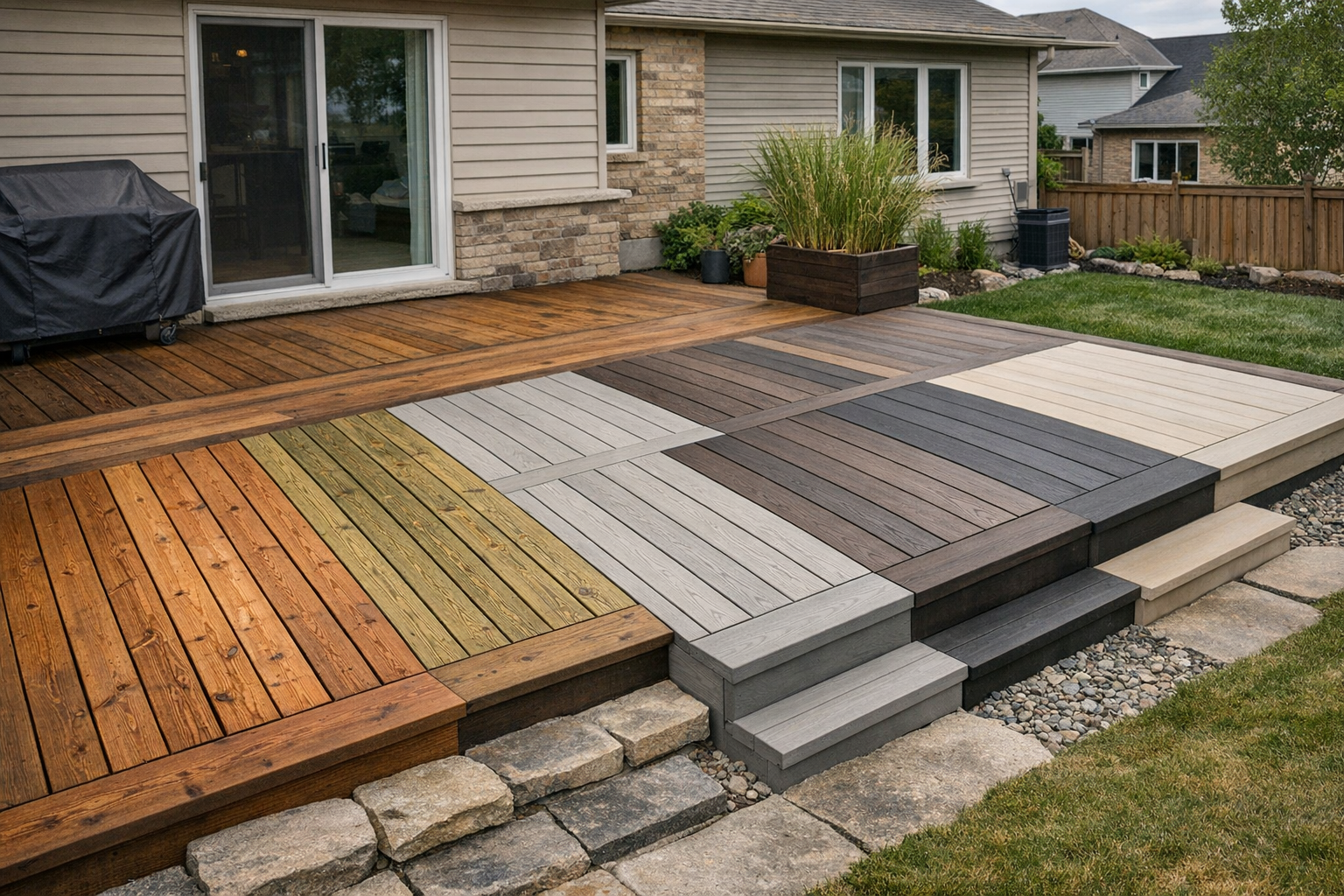
Deck materials and finish options in Brantford, Ontario
Things to Remember:
Material and finish choices affect how a deck looks, feels, and holds up over time. In Brantford, Ontario, snow, rain, and freeze-thaw cycles can expose weak choices fast. A deck that looks good on install day can turn into a maintenance problem if the boards, railings, and hardware do not work well together.
Pressure-treated lumber and the upkeep it really needs
Pressure-treated lumber is usually the lowest upfront cost. That makes it a common choice for larger decks where material price matters.
The tradeoff is long-term upkeep. Boards can shrink, crack, cup, and twist as they dry out, especially in the first seasons after installation. If you expect a smooth, furniture-grade surface for years without regular work, this material often disappoints.
Staining schedule matters. Apply finishes too early and moisture can get trapped. Wait too long and the surface can weather unevenly. Fastener stains and raised grain also become more obvious if maintenance is delayed.
Cedar deck boards and the balance between looks and wear
Cedar is chosen for its natural colour and lighter feel underfoot. It also tends to stay straighter than lower-grade treated lumber when the board quality is good.
That said, cedar is not a no-maintenance option. Sun exposure can turn the surface grey, and softer fibres can wear faster in high-traffic areas or under heavy furniture. Stairs and landing zones often show damage first.
The main decision is appearance versus durability. If you want the warm wood look, cedar can be a strong fit. If you do not want a regular cleaning and refinishing cycle, it may not match your expectations.
Composite decking, finishes, and surface feel
Composite decking offers wider colour ranges than wood. Brands also vary in board cap thickness, embossing, gloss level, and edge profile. Those details affect both appearance and installation method.
Surface texture matters more than many homeowners expect. Deep embossing can improve grip, but it may also hold dirt in low spots. Smoother boards are easier to wash, but some show scratches and scuffs more clearly. A sample board in full sun often tells you more than a brochure.
Maintenance is still part of ownership, even if sealing is not. Understanding composite deck maintenance helps set realistic expectations about staining, seasonal washing, and how shaded areas age compared with open exposure.
Railing options and where each one makes sense
Railing changes both safety and style. The right choice depends on sightlines, privacy, upkeep, and how exposed the deck is to weather.
- Aluminum railings are low maintenance and stay straight, but colour choice is usually more limited.
- Glass railings keep views open, but they show water spots, pollen, and fingerprints quickly.
- Wood and composite railings can match the deck well, but bulkier profiles may block the view and need tighter detailing.
These details can make a deck feel complete, but they need planning early. Wiring paths, transformer locations, and stair layout should be resolved before boards go down.
Lighting, post caps, and under-deck finishing details
Post cap lights and stair lights add visibility, but cheap fixtures often fail at connections before the fixture body wears out. If access is blocked by trim or skirting, a small repair can turn into a partial tear-out.
Under-deck finishing also needs a clear purpose. If the lower area will be used for storage or seating, drainage and ventilation matter. A finished ceiling without proper water control can trap moisture and create staining, sagging, or hidden framing issues.
A common mistake is choosing railing only by appearance. Heavy top rails, poor post layout, or weak connection points can make a finished deck feel less solid than expected. In Ontario conditions, spring movement and hardware loosening are worth watching, which is why a seasonal deck railing inspection is a practical habit.
Fasteners, hidden clips, and trim boards
Fasteners affect both appearance and board performance. Face screws are visible, but they often provide stronger pull-down on problem boards. Hidden clip systems give a cleaner look, though some limit how much correction an installer can make during layout.
Material compatibility is critical. The wrong screw coating can corrode, stain boards, or react poorly with treated framing. Trim boards also need careful use, because large fascia runs can expand, ripple, or show uneven seams if fastening patterns are wrong.
Before choosing the final package, compare not just the board sample but the full system, rails, trim, fasteners, and lighting. That is usually where the real difference shows up after a few Brantford seasons.