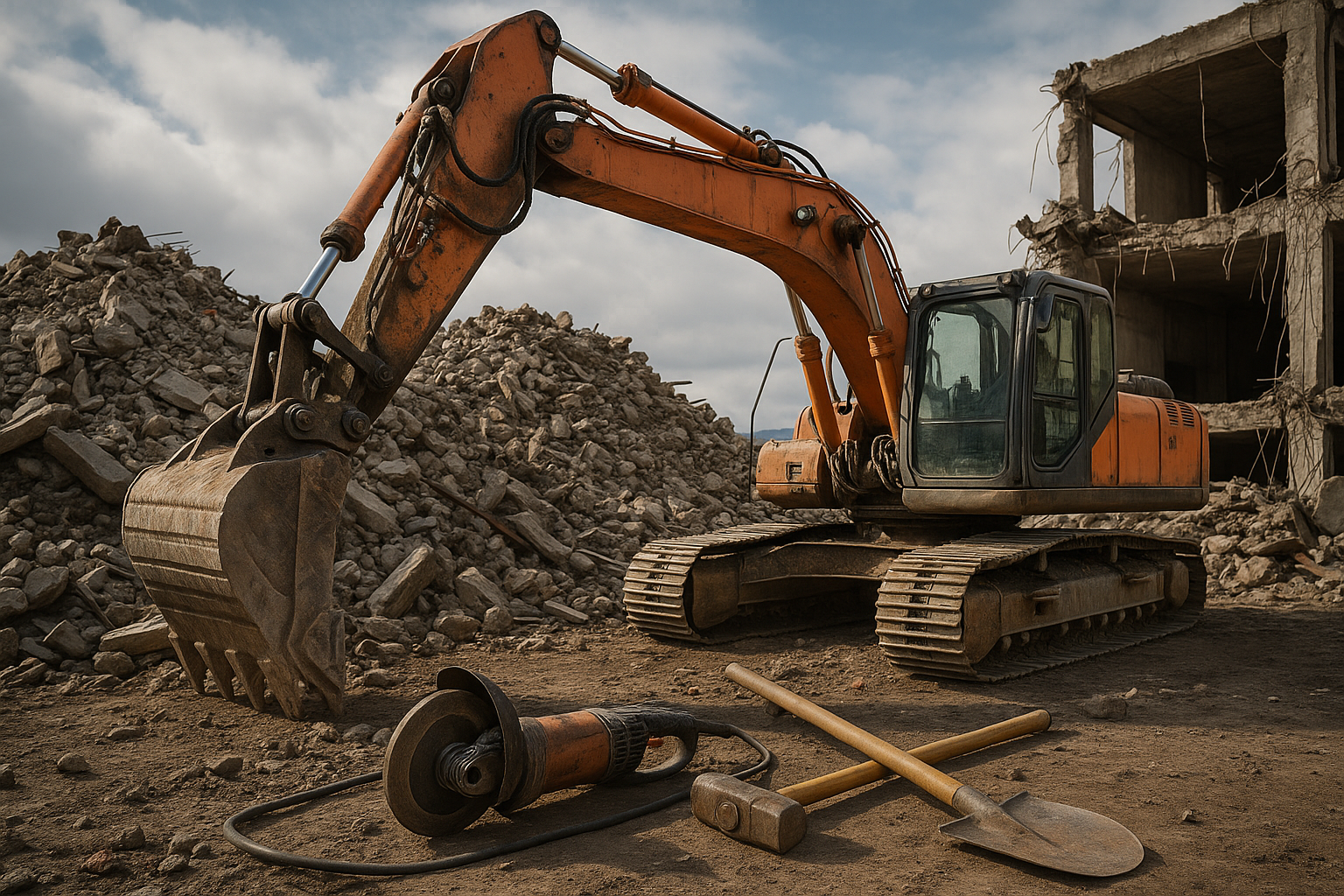
Equipment Used by Demolition Contractors
Why the equipment matters
Choosing the right equipment is crucial for demolition contractors to complete projects efficiently and safely. The wrong tools can lead to delays, increased costs, and safety hazards. Understanding the common machinery and tools helps in evaluating contractor capabilities and project planning.
Excavators and Hydraulic Breakers
Excavators are the backbone of many demolition projects. Their versatility allows them to handle various tasks, from digging to lifting heavy debris. When paired with hydraulic breakers, they can efficiently break through concrete and rock.
A common mistake is using an excavator without the proper attachment for the material being demolished. This can cause excessive wear or damage to the machine. Contractors must match the breaker size and power to the material hardness to avoid equipment failure and project delays.
Wrecking Balls and Cranes
Wrecking balls attached to cranes are traditional demolition tools used to bring down large structures. While effective for certain buildings, they require skilled operators to control the swing and impact force. Improper use can cause unintended damage to nearby structures or create dangerous flying debris.
Modern demolition often favours more precise equipment, but wrecking balls remain useful for specific scenarios where controlled, large-scale impact is needed. The tradeoff is less precision and higher risk compared to newer methods.
Dump Trucks and Debris Removal Equipment
Removing debris quickly is vital to keep demolition sites safe and organized. Dump trucks transport rubble to disposal areas, while specialized debris removal equipment such as loaders and conveyors speed up the cleanup process.
Delays in debris removal can halt work and increase costs. Choosing the right size and number of trucks depends on the demolition scale and site access. Overloading trucks or using inefficient equipment can cause bottlenecks and safety hazards.
Contractors must also plan routes and disposal sites carefully to comply with local regulations and avoid fines.
Specialized Tools for Concrete and Metal Demolition
Many contractors rely on demolition safety equipment standards to guide their safety programs and training.
Concrete and metal require different demolition approaches. Tools such as diamond saws and crushers are used for concrete, while cutting torches and shears handle metal structures.
Using the wrong tool can damage materials beyond what is necessary, increasing disposal costs or complicating recycling efforts. For example, cutting metal with blunt shears wastes time and risks equipment damage.
Safety Equipment and Machinery Maintenance
Contractors often combine several specialized tools to optimize the demolition process. Understanding these tools helps in assessing the quality and efficiency of a contractor’s work.
Safety equipment is essential to protect workers from hazards like falling debris and dust. This includes helmets, eye protection, respirators, and barriers. Proper machinery maintenance is equally important to prevent malfunctions that can cause accidents.
Contractors often consult detailed resources like the heavy equipment demolition guide to plan equipment use and avoid common pitfalls.
Choosing the Right Equipment for Your Project
Neglecting safety gear or maintenance leads to higher injury rates and project interruptions. Contractors must follow strict protocols and regularly inspect equipment to ensure reliability.
Selecting appropriate machinery depends on the project size, materials involved, and site conditions. Balancing power, precision, and safety is key to effective demolition.
Proper equipment choice reduces downtime, controls costs, and improves overall project outcomes.